Turn E-commerce Traffic into Sales with AI Search and Recommendation
Traffic to e-commerce websites is increasing, but conversions remain unchanged?
How can you improve product click-through rates?
How can users quickly discover products they are actually interested in?
Aosom, a world-leading e-commerce company once faced the same challenges. By partnering with Prophetes AI Co., Ltd. to build an advanced search and recommendation system, the company significantly improved on-site traffic utilization, enhanced user experience, and achieved a measurable lift in sales.
Prophetes Search System: Supports multilingual intent recognition and has increased search click-through rates by over 30% across its multiple websites.
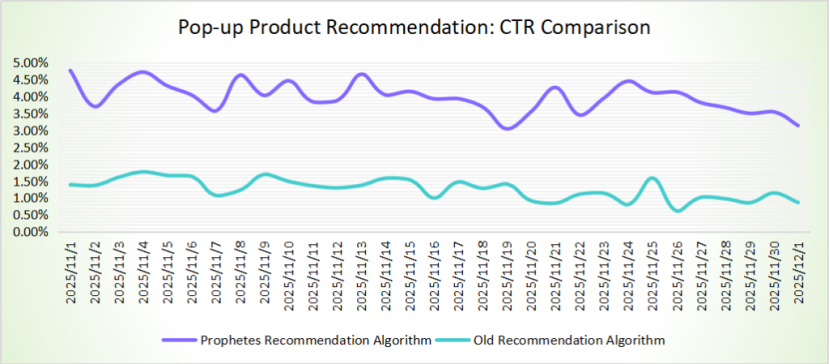
Prophetes Recommendation System: Delivers personalized recommendations, increasing its click-through rates by over 100%.
01. Capturing the Most Valuable Traffic in the Search Journey
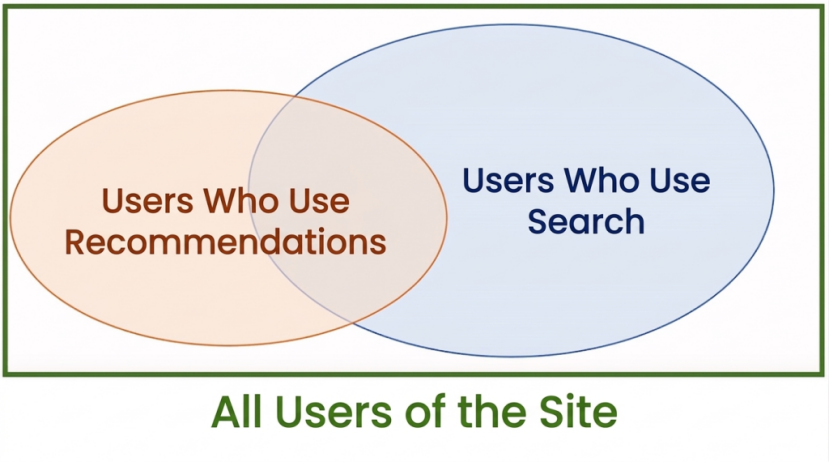
Among visitors to an e-commerce website, around 50% already have a clear purchase intent and actively use the search bar to find products.
However, ecommerce websites often have large product catalogs and diverse categories. This frequently leads to irrelevant or incomplete search results.
Many store owners underestimate how critical the search experience is for traffic retention and conversion.
Store owners who previously worked with large e-commerce platforms are used to the excellent search experiences. Yet the search experience on their own websites is often overlooked.
The search bar may look the same, and it may serve as the same entry point for traffic. But the ability to convert that traffic can be dramatically different.
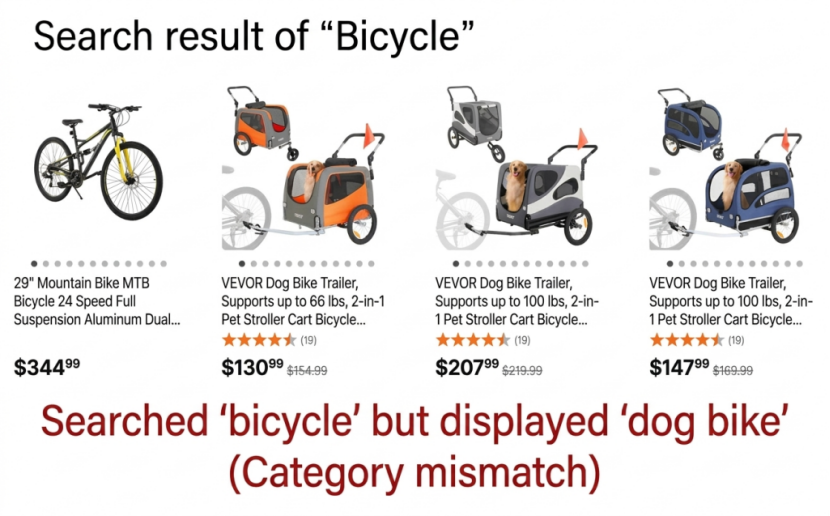
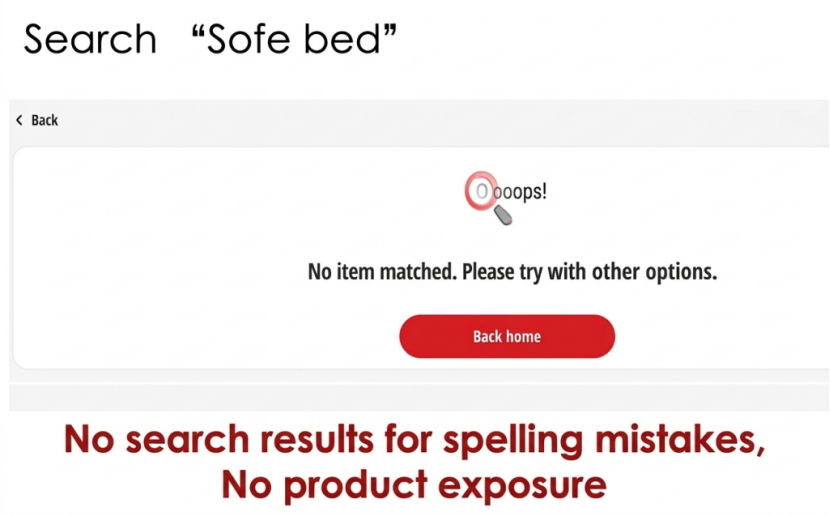
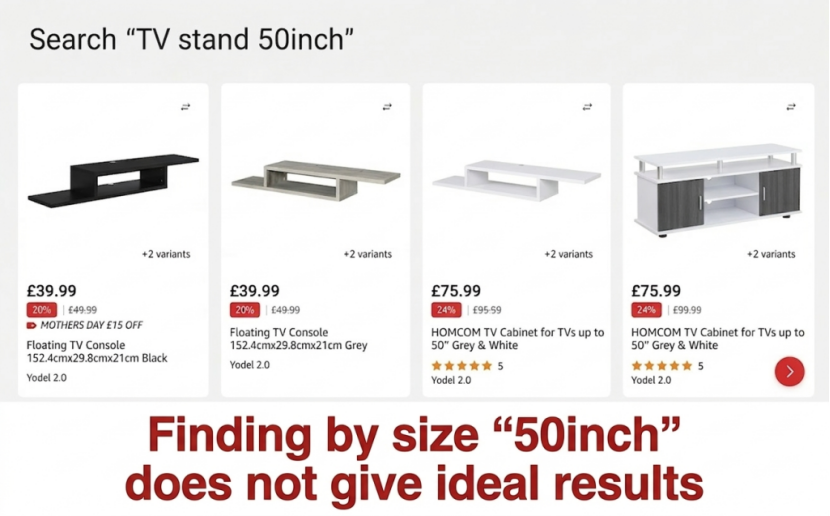
Below are some common search failure scenarios seen on e-commerce websites. Even large websites generating hundreds of millions in annual revenue encounter these issues.
Bad Cases: Lack of “Intent Recognition” in Search
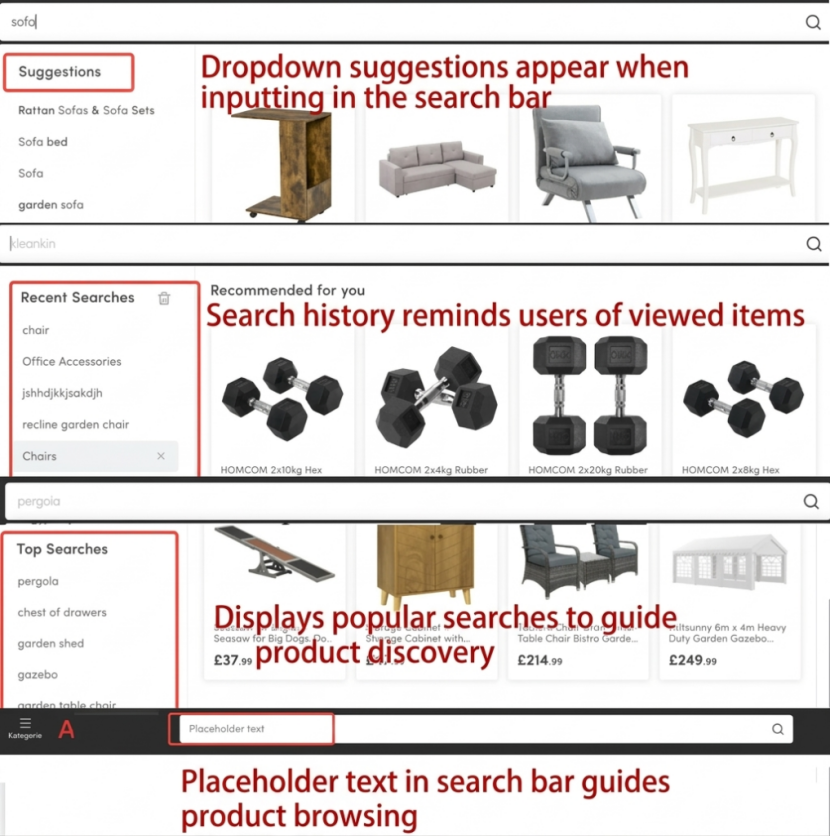
Bad Cases: Lack of “Search Guidance”
· No autocomplete suggestions when users type, making it harder to enter accurate queries.
· No search history. Users may forget what product they intended to find.
· No trending keywords or background hints, preventing good products from gaining visibility.
Below is an example of what ideal search guidance looks like.
These small gaps in the search experience gradually result in lost traffic and missed conversions.
Users browsing ecommerce websites have limited patience. If they cannot quickly find what they want, they simply leave. So how can these search friction points be eliminated to retain users and surface the right products?
Prophetes Search Solution:
Prophetes search system deeply integrates large language models, natural language processing, machine learning, and deep learning to build a high-performance search system.
Through synonym expansion, named entity recognition, and category prediction, the system accurately understands user intent and surfaces relevant products more effectively. In short, the search bar can truly understand what users mean, not just what they type.
The system is stable and efficient, supporting thousands of concurrent search requests, with an average response time of 99 milliseconds. By unlocking the full value of search traffic, Prophet helps ecommerce stores overcome the common issues of irrelevant or inaccurate results while significantly improving product click-through rates.
1. Synonym Expansion
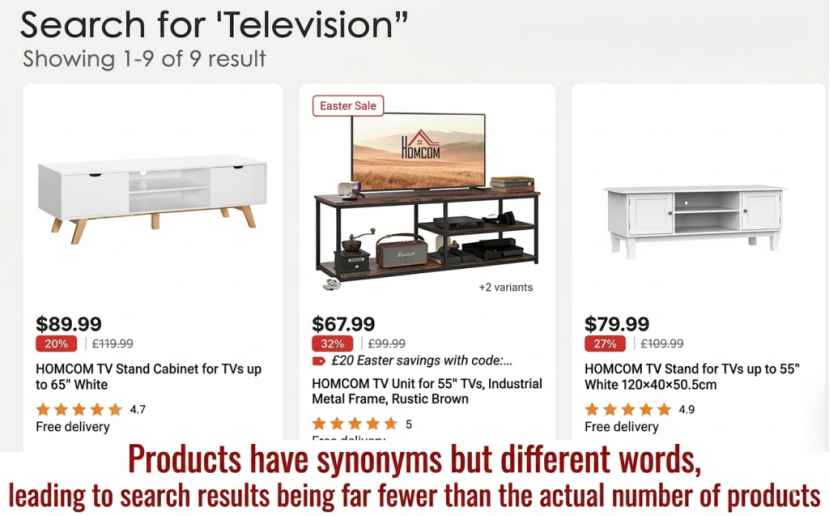
For the same product (e.g., Television stand), users may search using different terms (such as TV stand or TV std). Meanwhile, when products are listed, the website operators may also use different descriptive words to describe the same item. This creates the problem of different words referring to the same product.
Prophetes’ search system includes synonym management, which automatically mines synonyms corresponding to search terms. When users input a search query, the system accesses a predefined synonym dictionary, greatly reducing product omissions caused by wording differences and improving both product recall and exposure rates.
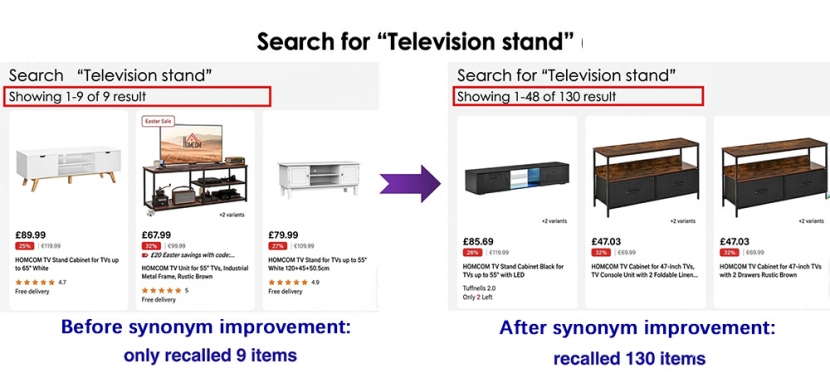
Before synonym expansion: only 9 products were retrieved. After synonym expansion: 130 products were retrieved.
2. Named Entity Recognition
Based on product data uploaded to the ecommerce site, dictionaries are built for brand names, materials, colors, and categories. When analyzing a user’s query, the system checks whether any terms match entries in these dictionaries. Products matching fields such as brand, material, or category are prioritized in search results.
Named entity recognition enriches the traditional search mechanism that relies solely on keyword matching, greatly improving search accuracy and user satisfaction.
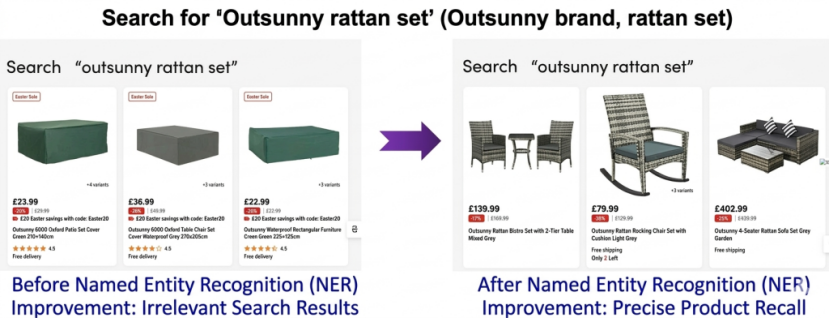
Before named entity recognition: search results were mismatched. After named entity recognition: results are accurately retrieved.
3. Category Prediction
As the name suggests, category prediction estimates which category users are most likely to click after searching for a specific keyword.
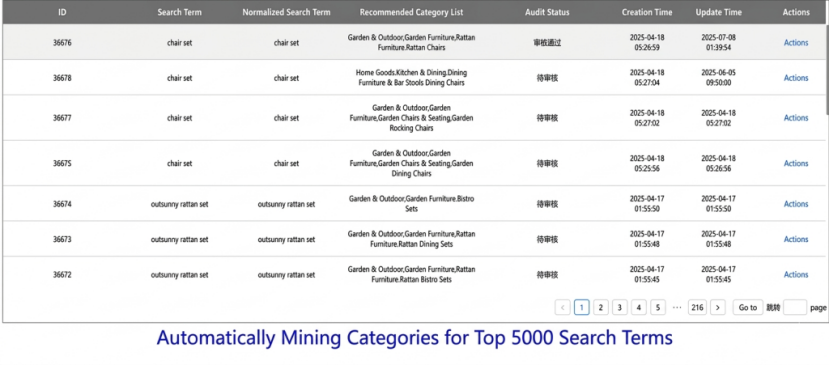
The system automatically mines the top 5,000 most popular search keywords and their corresponding categories.
4. Others
In addition to search intent recognition, Prophetes’s search solution also covers multi-channel recall, ranking, and re-ranking. It not only accurately retrieves target products but also ensures that these products appear in top positions, saving users time.
Newly launched products can gain better display positions rather than being buried at the bottom. Operators can also fine-tune search results and manually adjust product rankings, enabling flexible product management.
Increase Ecommerce GMV with Prophetes Search
For Aosom, the world-leading e-commerce company mentioned at the beginning, Prophetes implemented a complete search system covering intent understanding, recall, ranking, and re-ranking. This solution overcomes the limitations of traditional e-commerce search mechanisms that fail to accurately match user needs and significantly improves search accuracy, search click-through rate, and payment conversion rate for Aosom websites.
02. Recommending Products Based on User Preference: to Boost Conversions
Besides active search, where does the rest of the on-site traffic go? When users do not have a clear purchase target, they enter an exploration state—browsing pages and quickly discovering products that match their interests. To fully utilize this portion of traffic value, e-commerce websites need a well-designed product recommendation mechanism.
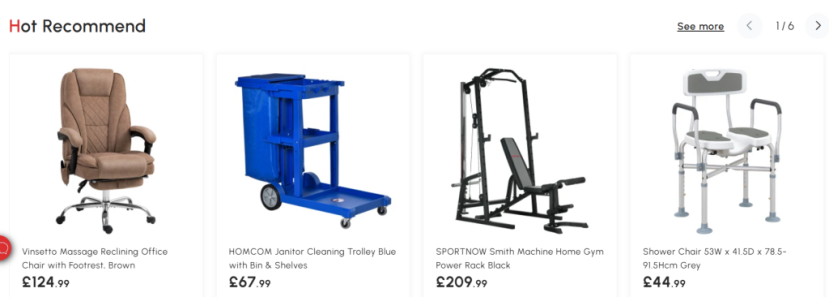
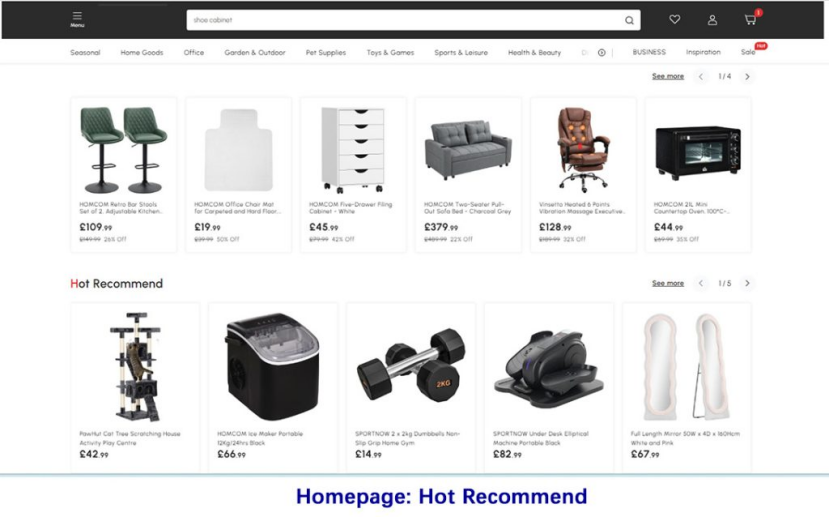
Many ecommerce sites have a “hot recommendations” section on the homepage. However, in the chain of recommendation → conversion, Recommendation goes far beyond just the hot recommendation placement.
Only a website that truly achieves personalized recommendations can be considered an interest-driven e-commerce website. Through data analysis and processing, it could be possible to present products differently to each individual: Returning users see items aligned with their preferences; New users without historical behavior see popular and high-performing products.That is the foundation for capturing browsing traffic.
Bad Cases of Recommendation Systems
Even large ecommerce sites whose annual revenues exceed hundreds of millions encounter these problems:
· Homepage recommendations are manually selected and fixed
· No ability to match recommendations with user interests
· No personalization, meaning all users see the same products
· No similar product suggestions on product detail pages
· No complementary product recommendations in the cart to increase order value
These issues reveal a deeper problem: a lack of strategy for handling browsing traffic. If users are not actively searching for products, why not let them be recommended to products?
Prophetes Recommendation Solution:
Prophetes recommendation engine captures passive traffic within the site, enabling users to discover products naturally while browsing.
By mining both non-personalized recall sources (popular products, high-quality products, new arrivals, brand products, discounted products) and personalized recall sources (products users clicked, added to cart, favorited, reviewed, shared, similar products to those they clicked, products within the same category, and products favored by users with similar behavior), the system combines these different sources to produce high-quality personalized recommendations.
Prophet’s recommendation solution covers the entire recommendation placement matrix across e-commerce sites. In addition to homepage recommendations, it includes placements throughout the entire user journey:
1. Homepage Recommendations
Popular products for new users; Personalized products for returning users.
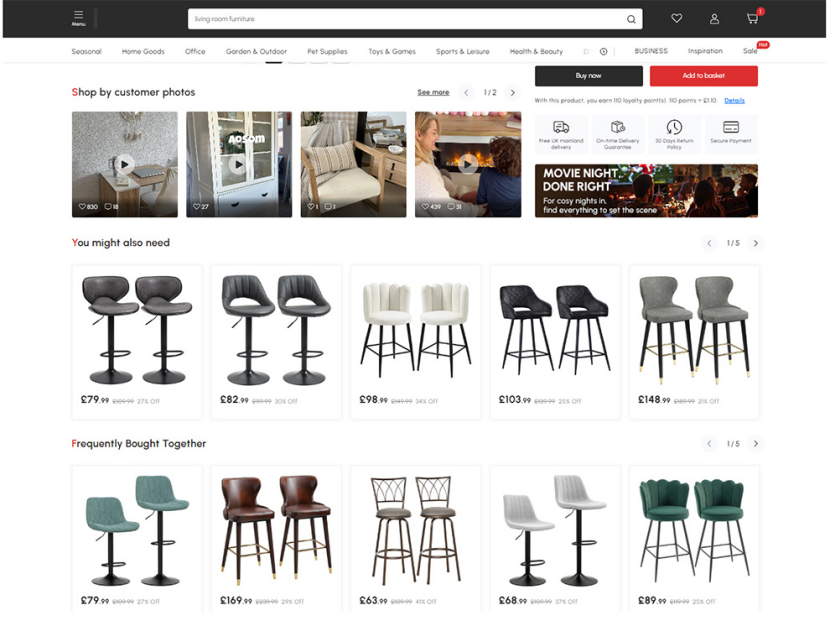
2. Product Page Recommendations
“You May Also Need” — recommending products similar to the current product. “Frequently Bought Together” — recommending complementary products.
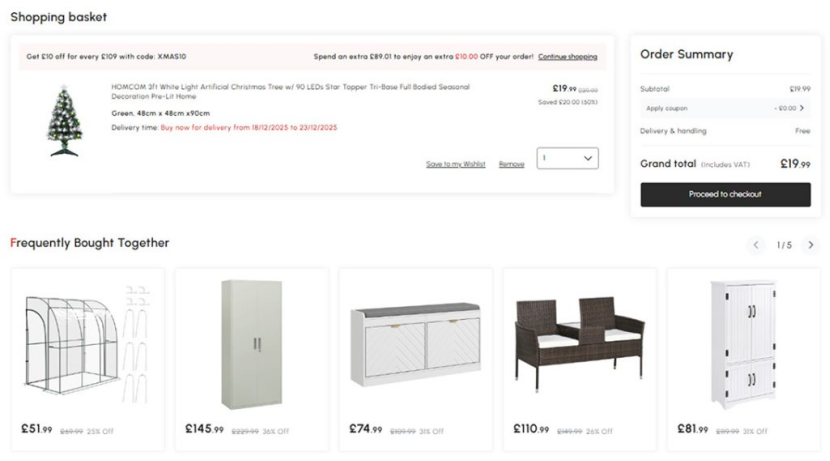
3. Cart Page Recommendations
“Bundle Recommendations” — suggesting additional items to increase order value.
4. Recommendation Integrated with Search
Search results page recommendations: Even when users have clear search intent but cannot find the ideal product, similar items can be recommended based on search results.
No-results search page recommendations: If users fail to find products due to search term mismatch or stock shortages, the system recommends popular products and personalized items based on behavior.
Boost sales from Recommendation
Prophetes has built an intelligent recommendation service for Aosom, implementing features such as hot recommendations, you-may-also-need, and frequently-bought-together. Through precise data tracking and analysis, the system achieved true personalized recommendations, Helping Aosom:
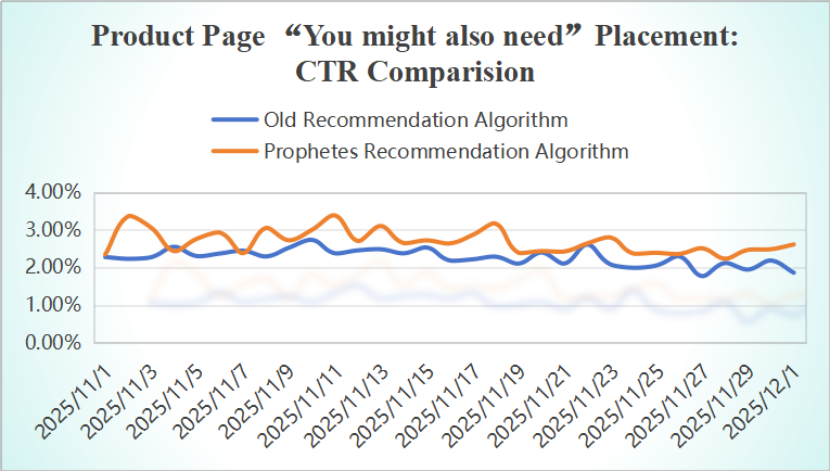
Increasing “You may also need” click-through rate on product pages by 17.7%.
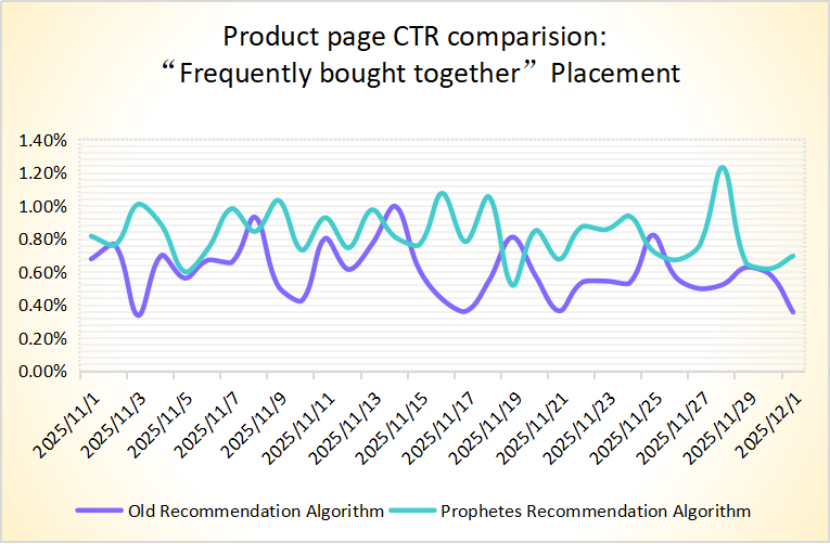
Increasing “Frequently bought together” click-through rate on product pages by 43.07%.
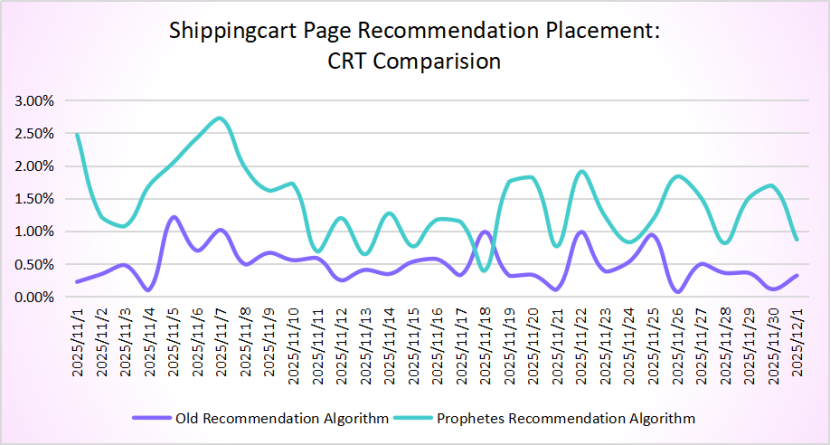
Increasing Cart page recommendation click-through rates by 191.35%.
Add-to-cart popup recommendations increased click-through rates by 214.96%.
03. Why Do E-commerce Sites Choose Prophetes?
Traffic alone does not guarantee sales. Prophetes’ search and recommendation solution helps e-commerce websites fully leverage both:active traffic (search) and passive traffic (recommendation). This significantly increases product exposure, click-through rates, and ultimately sales.
· Deep E-commerce Expertise: Prophet specializes in search and recommendation technologies tailored specifically for e-commerce scenarios.
· End-to-End Technology Stack: From intent recognition → recall → ranking → re-ranking, Prophet delivers a complete solution.
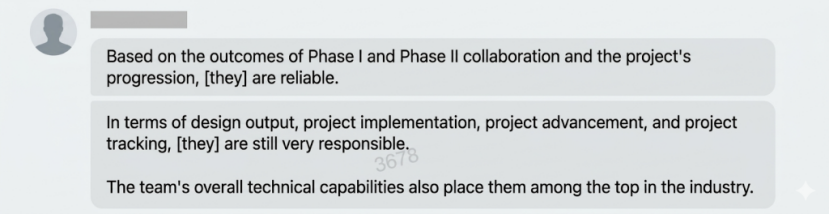
Prophtes finished implementing the search and recommendation system for Aosom and received written recognition from Mr. Chen who is the company’s R&D leader: “Prophet’s team was highly responsible from solution design to project delivery, and their technical capabilities rank among the top in the industry.”
After multiple rounds of optimization and iteration, the Aosom project has become a benchmark case for Prophetes in the e-commerce search and recommendation space. Through strong engineering capabilities and continuous algorithm optimization, the Aosom ecommerce websites achieved significantly better traffic utilization and conversion performance.
Final Thoughts
The cost of online traffic continues to rise. Beyond acquiring traffic from external channels, the real challenge is retaining and converting traffic once it reaches your site.
Traffic ultimately exists for one purpose: to generate sales.
Search and recommendation are the two core mechanisms that enable online stores to fully capture both intent-driven traffic and discovery-driven traffic.
An e-commerce search and recommendation system is not a cost center. It is a hidden GMV growth engine. If your e-commerce website is experiencing challenges such as:
· High traffic but low conversion rates
· SEO improvements with limited results
· No ideas on where to start interest-driven ecommerce
Feel free to contact us: info@prophetes.ai
Visit Insight Search Homepage